



 When you’ve poured your heart into writing your memoir, the idea of creating an audiobook can feel both thrilling and daunting. Readers who connect with your story often want to hear it in your voice, not just metaphorically, but literally. At the same time, the thought of stepping into a recording booth or even setting up a makeshift one at home can be intimidating.
So how do you know whether you should narrate your own memoir? Let’s walk through the big questions together.
Why Memoir Feels Different
With a novel, listeners rarely expect the author to narrate. But memoir sits in a different category. Memoir is personal. It’s your life, your voice, your perspective. Many listeners feel a deep intimacy when they hear a memoir spoken by the person who lived it. Think of authors like Michelle Obama, Matthew McConaughey, or David Sedaris. Their audiobooks have an extra layer of authenticity precisely because their voices are the ones guiding us through the story.
But here’s the catch: narrating your memoir isn’t automatically the right choice for every writer. Professional audiobook narration is an art form, and while your story belongs to you, the spoken delivery of that story might need more consideration than you’d expect.
The Case for Narrating Your Memoir
1. Authentic Connection
No one can capture your life experiences the way you can. When listeners hear your pauses, your laughter, or even your trembling voice in vulnerable moments, it can hit with an authenticity that no professional actor could replicate. For memoir especially, this emotional weight can make the listening experience unforgettable.
2. Building Your Author Brand
For indie authors, your voice is part of your brand. Narrating your memoir can help readers feel closer to you as a person, not just as a name on a book cover. If you also speak at events, run a podcast, or share videos online, having your voice tied to your book strengthens that connection.
3. Creative Control
When you narrate, you decide how each sentence lands. You know the intention behind every word, and you can deliver it exactly as you envisioned. This level of control can be empowering, especially if your story includes sensitive or nuanced moments.
The Case for Hiring a Professional Narrator
1. Technical Skill and Stamina
Reading into a microphone for hours at a time is physically and mentally demanding. Narrators train to maintain consistent pacing, energy, and clarity over long recording sessions. They also know how to handle tricky pronunciation, dialogue, and emotional shifts without losing momentum.
2. Audio Quality Matters
Listeners have high expectations for audiobooks. If the audio sounds inconsistent or amateur, it can distract from your story. Professional narrators typically record in studios with top-tier equipment, and many work closely with audio engineers who polish the final product. Doing it yourself often means extra expenses for equipment, software, and editing help.
3. Distance Can Be Powerful
Sometimes a little distance from the material helps. If your memoir contains trauma, grief, or complicated emotions, reliving those moments aloud may feel overwhelming. A skilled narrator can carry the story while respecting its weight, allowing you some separation.
Questions to Ask Yourself Before Deciding
1. How Comfortable Are You Behind the Mic?
If you already record podcasts, give presentations, or feel natural speaking in front of others, you might be a good candidate for self-narration. If the thought makes your throat tighten and your palms sweat, that’s worth paying attention to.
2. Do You Have the Time and Resources?
Recording an audiobook is not a weekend project. For a 70,000-word memoir, you’re looking at roughly 8 to 10 hours of finished audio. But recording takes much longer, often 3 to 4 hours in the studio per finished hour, plus editing and proofing. I found this to be true for my memoir audiobook recording. From beginning to end, it took me just over four months, working away at it part time. That’s a big investment of time and energy.
3. How Important Is It for Readers to Hear Your Voice?
Some stories truly demand the author’s voice. Others may shine just as brightly in the hands of a professional narrator. Think about how essential your personal delivery is to the listener’s experience.
4. What’s Your Budget?
Hiring a professional narrator can be costly, with rates ranging from $200 to $500 per finished hour. But self-narration isn’t free either. You’ll need equipment, editing, time learning, and possibly studio rental. Run the numbers realistically before deciding.
Blended Approaches to Consider
You don’t necessarily have to choose between all you or not you at all. Some memoirists take a hybrid approach:
- Author’s Preface or Afterword: You narrate the introduction or closing thoughts, while a professional handles the main chapters. This gives listeners a taste of your voice without requiring you to carry the entire project.
- Dual Narration: If your memoir includes multiple perspectives or sections, you could narrate parts of it while bringing in a narrator for the rest.
- Podcast-Style Companion: Instead of narrating the audiobook, you could create a companion podcast or bonus audio series where you reflect on the memoir in your own words.
The Emotional Side of Narrating Your Memoir
There’s a practical checklist for narration, but there’s also an emotional one. Memoir isn’t just words on a page, it’s your life. Reading it aloud, line by line, can be cathartic, but it can also be exhausting. Some authors describe the process as healing. Others find it reopens wounds they thought had closed. Neither reaction is wrong, but it’s something to anticipate before committing.
I did find the process healing overall, but I limited myself to recording for only 3-4 hours a day. I brought in cough drops and honey tea to keep my voice strong. I finished the entire book in raw audio format in two weeks and even with all the attention to my voice and keeping it steady throughout those two weeks, I was exhausted afterward.
How to Prepare If You Decide to Narrate
If you’re leaning toward narrating your memoir, here are a few steps to set yourself up for success:
- Practice, Practice, Practice. Read chapters aloud before you record. Notice where you stumble or run out of breath. Adjust pacing as needed. I read my entire book all the way through, out loud, before I started recording in my home DIY studio.
- Consider Coaching. Audiobook narration coaches can help you refine your delivery and prepare you for the demands of recording.
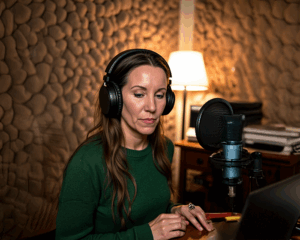
- Invest in Sound Quality. At minimum, you’ll need a good microphone, quiet recording space, and audio editing support. I would also suggest a laptop and additional monitor hooked up. The laptop to watch the recording and the monitor with your book pulled up to read.
- Work in Sessions. Don’t try to power through long stretches. Recording in shorter, consistent sessions keeps your voice fresh. As mentioned, I limited myself to 3-4 hours a day.
- Hire a Professional Engineer. Even if you record yourself, have someone experienced, like me, handle the editing and mastering. You can also find engineers on freelancing websites, like Fiverr. A polished final product is essential.
My Honest Take
Here’s the truth: there’s no universal right answer. When you narrate your own memoir, it can be deeply rewarding and create a once-in-a-lifetime connection with your readers. I truly suggest that if you CAN do it yourself, do it. But if it makes you too nervous or anxious, it’s not the only way to honor your story. Choosing a professional narrator is not less authentic, it can simply be the wisest choice for your voice, your time, and your wellbeing.
I originally asked a dear friend who had a great reading and speaking voice to read my memoir for me and her first words were “you should do it.” I pressed forward thinking it would be better if she read it because the story was too emotional for me to read out loud, but I did some research (much like you’re doing reading this post) and finally came to the conclusion that it would be the best thing for my memoir to narrate it myself. Now I’m so glad I did because the feedback I get from people is that they feel connected to me when they listen.
What matters most is that your story is told well and reaches the listeners who need it. Whether that’s through your own voice or someone else’s, the goal remains the same: connection.
How I Can Help Indie Authors
If you’re weighing the decision about whether to narrate your own memoir or simply feeling overwhelmed by the audiobook process, I can help. I work alongside indie authors to navigate the publishing journey step by step, from manuscript to finished book to audio production. Together, we’ll look honestly at your options, balance the creative and practical sides, and find the path that feels right for you.